

© Moses Nutrition August 2026
Daily sunshine is one of the simplest, most powerful things you can do for your health.
It is not just about getting a tan or feeling warm. Sunshine is a full package of three different kinds of light that all travel together from the sun to Earth.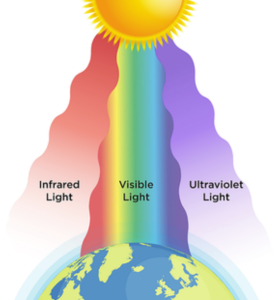
- Visible light is the part we can actually see with our eyes. It includes all the colors of the rainbow, from red to purple (“violet”).
- Ultraviolet (UV) light sits just beyond the violet end of what we can see. In this image it is shown as a purple glow so we can understand where it belongs in the light spectrum, but it is completely invisible to the human eye.
- Infrared (IR) light sits just beyond the red end of what we can see. In this image it is shown as a red glow for the same reason — so we can see its place in the spectrum — but it is also invisible. We mainly feel infrared light as warmth on our skin. Think of red heat lamps — those are infrared heat lamps!
All three of these kinds of light reach us from the sun, and each one interacts with the body in its own useful way, talking directly to your cells, your brain, and your blood vessels. When you get the right amount every day, your energy, mood, blood pressure, and immune system all work better.
Here is what actually happens inside you when sunlight hits your skin and eyes.
Infrared Light and Your Mitochondria
Mitochondria are the tiny power plants inside almost every cell in your body. They turn the food you eat into energy (called ATP) that keeps you alive and moving.
Infrared light (the red glow on the left side of the image above) from the sun reaches deep into your body. It helps mitochondria work more efficiently. They make more energy and create less harmful waste. This is one reason people often feel more energetic and recover better when they get regular sun exposure. Unfortunately, windows block most of this helpful infrared light.
Bright Light and Dopamine
Dopamine is a brain chemical that helps with motivation, focus, drive, and feeling good about doing things. When dopamine is low, everything feels harder.
Bright natural light in the morning hits your eyes and tells your brain to make more dopamine and to become more sensitive to it. Just 10–30 minutes of outdoor light soon after waking helps set this system for the whole day. It also strengthens your body clock so you feel alert during the day and sleepy at night.
Bright Light and Serotonin
Serotonin is a brain chemical that helps you feel calm, content, and emotionally steady. It also plays a role in appetite, digestion, and preparing your body for good sleep later because the body uses serotonin to make melatonin (the sleepy hormone) at night.
When bright sunlight enters your eyes (and to a lesser extent hits your skin), your body increases serotonin production. This happens especially with morning and daytime light. People who get regular sun exposure tend to have higher, more stable serotonin levels. That is one reason a walk outside often lifts your mood within minutes and why long stretches without sun can leave many people feeling flat or irritable.
UV Light and Nitric Oxide
Nitric oxide is a powerful signaling molecule your body makes and stores in the skin. When UV light (the purple glow on the right side of the image above) from the sun hits your skin, it releases this nitric oxide into your bloodstream within minutes.
Once released, nitric oxide relaxes and widens blood vessels throughout the body. This improves blood flow to the heart, brain, muscles, and every organ. Better circulation means more oxygen and nutrients reach your cells, which supports clearer thinking, steadier energy, stronger physical performance, and healthier sexual function. It also helps keep blood pressure in a healthy range and protects the delicate lining of your blood vessels over time. Even short, regular sun exposure can trigger this nitric oxide release and give your circulation a natural boost.
UV Light and Vitamin D
Vitamin D is made when UV light hits a cholesterol-like compound in your skin. Your body then turns it into a hormone that supports bones, muscles, immune function, and mood.
You cannot get meaningful vitamin D through windows or most clothing. You need bare skin and the right angle of sunlight. There are many complicated ways to calculate “the right angle of the sun”, like time of year in your location, etc., but here is the simple rule: the shorter your shadow is, the more vitamin D you are producing from the sun. So if you are 5 feet tall, and your shadow is 6 feet long, you are not getting any vitamin D from the sun. If your shadow is only 4 feet long, you are getting a little vitamin D. If your shadow is only 1 foot long, bingo!
Now, if you really want to get into it, the coolest tool to calculate the best time of day and how long to stay out is https://dfetcher.com/. You can even tell it how much vitamin D you want to get, how much of your body is showing, and how dark your skin is (lighter skin makes more vitamin D faster than darker skin). It’s a fantastic tool!
It is important to note that it is true that UV light causes skin aging and wrinkles, and contributes to skin cancer when you get too much. This is why we always tell people to not stay in the sun so long that they burn! But moderate sun exposure is critical for a happy, healthy life!
Other things to note:
Direct sunlight (when you can see the sun’s disc) delivers the full strength of ultraviolet (UV) and infrared (IR). This is what you need for efficient vitamin D and the strongest mitochondrial and nitric oxide effects. Indirect sunlight (shade, cloudy days, or light bouncing off surfaces) still gives some bright light for your eyes and some infrared, but vitamin D production drops a lot. On cloudy days you may need two to three times longer exposure, and sometimes vitamin D production almost stops.
Best Times of Day
Early morning — Getting sunlight in the first hour or two after sunrise is best for dopamine, setting your body clock, and gentle infrared. UV is still low, so you get almost no vitamin D and almost no burn risk. This is the safest and most important daily dose for mood and sleep.
Mid-morning to mid-afternoon This is when UV is strong enough for vitamin D. Around solar noon (when the sun is highest) is the most efficient time. You need less time in the sun to make the same amount of vitamin D. The exact window depends on where you live and the season.
Make It a Daily Habit
Start your day with morning sun. Even if you get up later and don’t even remember what a sunrise looks like, get bright sunlight on your eyes as early as you can. This boosts dopamine for motivation and focus, and raises serotonin for a calmer, steadier mood. Even 10–20 minutes helps set your body clock so you feel more awake during the day and sleep better at night. You do not need much bare skin for this part; it’s more about your eyes getting light. (Because this requires light to hit your eyes, it’s important that you don’t wear sunglasses during this time.) You’ll also get some gentle infrared for mitochondrial support on whatever skin you do have exposed. You’ll get almost no vitamin D and almost no burn risk. This is the most important daily dose for mood and sleep.
Later in the day, get another short session, ideally close to solar noon (when the sun is highest), with as much skin exposed as is practical and comfortable. Consider taking a quick walk during your lunch break as a good way to kill two birds with one stone: sunlight and exercise! This bright midday or early afternoon sun on your arms, legs, and face triggers vitamin D production and releases nitric oxide. This is also a stronger dose of infrared light reaching your mitochondria to support cellular energy.
You do not need long sessions. Short, consistent exposure is enough. Aim for a little every day rather than long stretches once in a while. Avoid burning — never stay out until your skin turns red. If you have a history of skin cancer or take medicines that make you more sensitive to the sun, check with your doctor first.
Sunshine is free and works through several pathways at once. A simple morning dose for your brain chemicals plus a short midday dose for your skin and blood vessels gives you most of the benefits without complicated routines.